
1. Baseline Statutory Filing Windows for Rideshare Claims
 Personal injury statutes of limitations vary significantly depending on the jurisdiction where the accident occurred. While the statutory timeframe for standard motor vehicle collisions applies to rideshare crashes, understanding state-specific statutory parameters is critical:
- Standard Personal Injury Windows: In most states, the deadline to file a personal injury lawsuit ranges from one to three years from the exact date of the crash. For instance, states like California enforce a strict two-year statute of limitations for personal injury claims.
- Wrongful Death Timelines: If a rideshare collision results in a fatality, family members pursuing a wrongful death claim face a separate statutory timeline. In many jurisdictions, the clock begins ticking on the date of the individual’s passing, which may differ from the accident date.
- Property Damage Claims: Claims seeking reimbursement solely for vehicle damage or destroyed personal belongings frequently carry a distinct statutory deadline from bodily injury claims, depending on local civil practice codes.
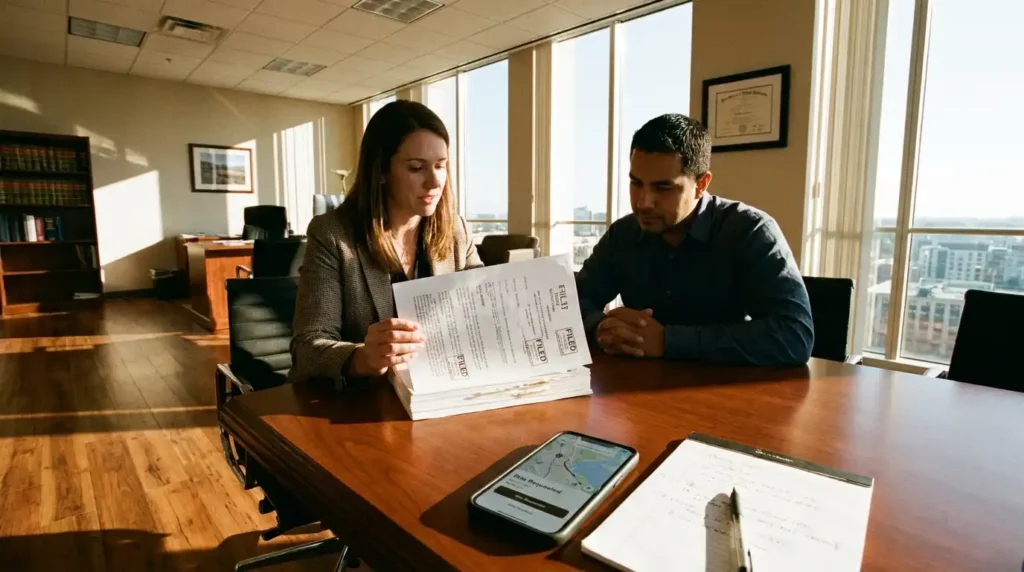
It is crucial to distinguish between internal insurance notification guidelines and statutory court deadlines. Notifying Uber or an insurance carrier through a mobile application does not stop the legal clock running on the statute of limitations. Only filing a formal civil complaint in a court of competent jurisdiction halts the statutory countdown.
2. Why Uber’s Multi-Tiered Insurance Framework Complicates Deadlines
Unlike standard two-vehicle traffic collisions, rideshare accidents involve overlapping primary, secondary, and contingent insurance policies. The specific coverage available—and the parties involved in litigation—depends heavily on the driver’s active status within the Uber application at the exact moment of impact:
- Period 0 (App Off): The driver is operating their vehicle for personal use. The driver’s personal auto insurer primary liability applies, subject to standard state injury filing deadlines.
- Period 1 (App On, Waiting for Request): The driver is logged into the app awaiting a ride request. Uber provides contingent liability coverage (typically up to $50,000 per person for bodily injury, $100,000 per accident total, and $25,000 for property damage). Pursuing both personal insurance policies and contingent commercial policies creates potential coverage disputes that can draw out early negotiations.
- Period 2 & Period 3 (En Route or Carrying a Passenger): From the moment a driver accepts a ride request until the passenger exits the vehicle, Uber maintains a $1,000,000 primary commercial liability policy.
These policy tiers frequently lead to lengthy jurisdictional and coverage disputes among insurance carriers trying to shift financial responsibility. If insurance adjusters prolong settlement negotiations while the filing deadline approaches, an unrepresented victim risks letting the statute of limitations expire while waiting for a settlement offer that never materializes.
3. Statutory Exceptions That Modify Filing Timelines
While state statutory windows provide a general benchmark, specific legal circumstances can alter, extend, or drastically shorten the deadline to initiate legal action:
A. Government Entity Involvement (Shortened Deadlines)

If an Uber crash involves a municipal bus, city maintenance vehicle, or dangerous road condition created by a public agency, standard statutory windows no longer apply. Government claims acts require victims to submit a formal administrative claim—often within six months or 90 days of the incident—before filing a civil lawsuit. Failing to submit an administrative notice within this truncated window permanently bars legal action against the public entity.
B. Minors and Legal Incapacity (Tolling Provisions)
When an injured passenger or third party is a minor (under age 18) at the time of the crash, state laws frequently “toll” or pause the statutory countdown. In many jurisdictions, the statute of limitations does not begin running until the minor reaches their 18th birthday. Similarly, if an injured party suffers legal incapacity due to severe traumatic injury, tolling provisions may temporarily pause the filing clock.
C. The Delayed Discovery Rule
In narrow instances where an injury was not immediately apparent and could not reasonably have been discovered right after the collision, the delayed discovery rule may adjust when the statutory clock starts. However, courts interpret this exception strictly, expecting victims to seek prompt medical evaluations following any motor vehicle collision.
4. The Risks of Delaying Legal Action
Even when months or years remain before a statutory deadline expires, delaying the commencement of an investigation severely compromises case integrity. Over time, critical evidence necessary to establish liability in a complex rideshare case can easily disappear:
- Loss of Digital Telemetry and App Logs: Uber captures precise GPS routing, vehicle speed, and app activity data. Retaining this electronic data requires issuing formal spoliation letters to the rideshare company before routine data retention windows expire.
- Vanishing Dashcam and Surveillance Video: Traffic cameras, nearby commercial security systems, and private dashcam recordings are routinely overwritten within 30 to 90 days.
- Fading Witness Recollection: Eyewitness statements become far less reliable as time passes, and witnesses may change phone numbers or relocate.
5. Actionable Steps to Safeguard Your Legal Rights
To ensure your rideshare injury claim remains valid and compliant with all statutory deadlines, take the following proactive steps immediately after a crash:
First, obtain a complete copy of the official police report and preserve all trip receipts, in-app notifications, and driver details from your rideshare application.
Second, seek thorough medical evaluations right away and maintain detailed records of all diagnostic tests, treatment plans, and out-of-pocket medical expenses.
Finally, consult an experienced rideshare accident attorney early in the process. A skilled attorney will accurately determine every applicable deadline, identify all available insurance coverage tiers, issue evidence preservation requests, and ensure all formal court pleadings are filed well before the statute of limitations expires.