
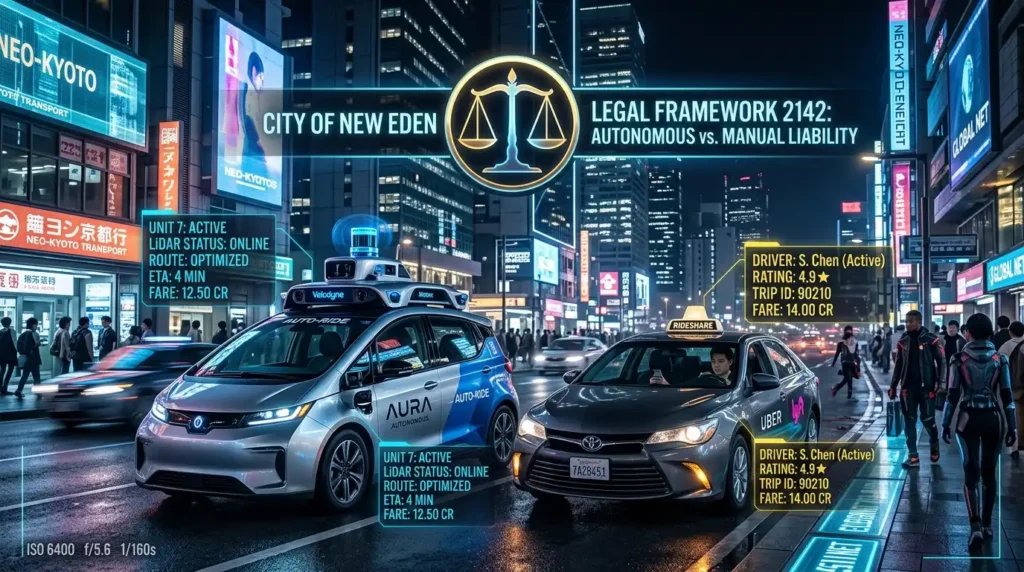
Insurance Landscape: The $5 Million AV Mandate vs. Standard $1M Human Policies
The most immediate distinction between a human rideshare crash and an autonomous vehicle (AV) collision lies in the statutory insurance framework governing commercial operations.
Human-Driven Rideshare Insurance Tiers
Traditional human-driven rideshare operations continue to operate under a three-period insurance model:
- Period 1 (App On, Searching for Request): Contingent liability coverage typically capping around $50,000 per person for bodily injury and $100,000 total per accident.
- Period 2 & 3 (En Route / Passenger in Vehicle): Commercial liability coverage reaching up to $1,000,000 per incident for third-party injuries and property damage.
The $5,000,000 Autonomous Fleet Mandate
Recognizing the unique risks associated with unmanned commercial vehicles, regulatory authorities—including the California Public Utilities Commission (CPUC) and state departments of motor vehicles—have established stringent insurance baseline requirements for driverless fleets. Autonomous rideshare operators providing passenger service must carry a minimum of $5,000,000 in commercial umbrella liability insurance per incident—five times the coverage required for human-driven vehicles.
While this $5 million policy ceiling provides a substantial financial recovery reservoir for victims suffering severe or catastrophic injuries, accessing these funds requires overcoming intense defense strategies mounted by corporate tech giants, vehicle original equipment manufacturers (OEMs), and self-insured fleet entities.
Legal Theories: Shifting from Driver Negligence to Product Liability
Determining fault in a traditional rideshare collision centers on evaluating human behavior. Proving liability involves demonstrating that a driver ran a red light, failed to yield, exceeded speed limits, or was distracted by an app notification. In contrast, robotaxi collisions dismantle the human negligence framework.
1. Strict Product Liability and Algorithmic Design Flaws
When an autonomous vehicle causes a crash, the central legal claim shifts from human error to strict product liability. Plaintiffs must demonstrate that the autonomous driving system (ADS) contained an inherent design defect, a manufacturing flaw, or an inadequate warning framework. Examples include:
- Perception System Errors: Failure of optical cameras, radar units, or LiDAR sensors to accurately identify and classify objects, pedestrians, or emergency vehicles in low-light or adverse weather conditions.
- Motion Planning and Algorithmic Failures: Software logic errors where the vehicle’s central processing unit miscalculates the trajectory of oncoming traffic or executes erratic, unpredicted braking (“phantom braking”).
2. Fleet Operator and Maintenance Negligence
Beyond software design defects, autonomous fleet operators owe a legal duty to maintain hardware integrity. Negligence claims may arise if a fleet manager fails to keep perception sensors clean and properly calibrated, defers necessary physical maintenance on steering and braking linkages, or fails to deploy required over-the-air (OTA) software patches designed to resolve known perception bugs.
3. Remote Safety Monitor Liability
Many commercial AV deployments rely on remote human operators who oversee vehicle operations from centralized monitoring facilities. If an autonomous vehicle encounters an unexpected traffic obstacle and requests human intervention, a remote monitor who fails to respond promptly or issues an unsafe navigation override can introduce secondary human negligence claims into the lawsuit.
Evidence Gathering: Black Box Telematics vs. Witness Testimony
In human driver accidents, liability arguments often rely on eyewitness testimony, police crash reports, field sobriety tests, and dashcam footage. In an autonomous robotaxi accident, the most decisive evidence is entirely digital.
Autonomous vehicles generate massive volumes of real-time data every second. To establish a successful claim, legal counsel must immediately secure access to internal data streams, including:
- Raw Sensor Perception Records: Multi-angle camera video feeds, point-cloud LiDAR scans, and radar return data capturing the seconds leading up to impact.
- Event Data Recorder (EDR) Logs: Detailed vehicle telemetry recording exact speed, steering inputs, throttle position, braking pressure, and system fault codes.
- System Diagnostic and Confidence Scores: Internal software logs showing what object classification the AI assigned to target obstacles and the system’s calculated level of confidence.
- Remote Operator Logs: Time-stamped audio, video, and data transmissions exchanged between the vehicle’s onboard computer and off-site teleoperation centers.
Because autonomous vehicle operators control this proprietary data, issuing immediate statutory spoliation letters is a vital legal step to prevent critical software logs and sensor feeds from being routinely overwritten or purged.
Comparative Breakdown: Human Rideshare vs. Robotaxi Crash Claims
| Feature | Human-Driven Rideshare (Uber/Lyft) | Autonomous Robotaxi Fleet |
|---|---|---|
| Primary Legal Theory | Driver Negligence (traffic violations, distraction) | Strict Product Liability & Fleet Negligence |
| Insurance Minimums | $1,000,000 (Periods 2 & 3) | $5,000,000 Mandatory Minimum |
| Primary Defendants | Individual Driver, Rideshare TNC | AV Technology Developer, Vehicle OEM, Fleet Operator |
| Key Evidence Required | Police reports, dashcams, driver app logs | LiDAR/Radar point-clouds, software logs, EDR telemetry |
| Defense Strategy | Blaming third-party drivers or comparative fault | Trade secret protections, regulatory preemption, user error |
Critical Steps to Take After an Autonomous Rideshare Collision
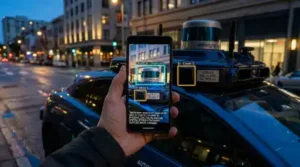
If you are injured as a passenger inside a robotaxi or are struck by an autonomous vehicle while driving or walking, taking precise action is necessary to safeguard your legal rights:
- Seek Immediate Medical Evaluation: Obtain thorough emergency medical attention even if symptoms appear minor, establishing a clear link between the collision and your injuries.
- Document the Physical Vehicle and Surroundings: Take high-resolution photos of the collision scene, license plates, vehicle ID numbers, and visible hardware equipment on the AV (such as damaged roof sensors, bumper cameras, or LiDAR domes).
- Identify Eyewitnesses and Law Enforcement: Ensure law enforcement officers file an official accident report specifically documenting that one of the involved vehicles was operating in an autonomous or driverless mode.
- Avoid Signing Early Corporate Releases: Fleet insurance representatives may attempt early outreach to secure quick releases before the full scope of software defects or long-term medical requirements are established.
- Engage Specialized Legal Counsel Immediately: Retain personal injury attorneys experienced in autonomous vehicle technology and product liability to ensure formal evidence preservation notices are served before telematics data is lost.
Conclusion
The rise of commercial robotaxis introduces advanced technology to our roadways, but it also creates complex legal challenges when crashes occur. Navigating the multi-million-dollar insurance requirements, product liability frameworks, and complex telematics evidence of an autonomous vehicle accident demands specialized expertise. By acting promptly to preserve critical digital evidence and understanding your rights under updated autonomous vehicle laws, victims can effectively hold fleet operators and technology developers accountable.