
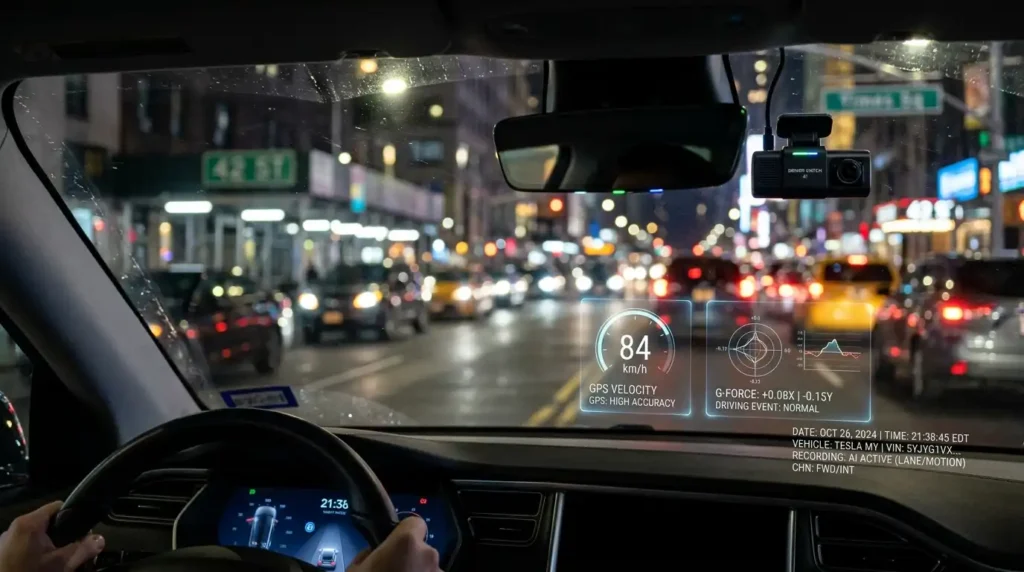
With the widespread integration of in-app video recording, automated AI dashcams, and real-time vehicle telematics tracking, the moments before, during, and immediately after a crash are captured with high precision. While these technological advancements aim to enhance driver and passenger safety, they fundamentally transform how injury claims are investigated, litigated, and settled.
The Evolution of In-App Telematics and AI Dashcams in Rideshare Fleet Operations
In an ongoing effort to mitigate risk and resolve liability claims faster, transportation network companies (TNCs) have increasingly turned to smart hardware and software solutions. Modern rideshare platforms rely on two primary digital data streams:
- Vehicle Telematics Data: Embedded mobile sensor tracking that monitors GPS positioning, real-time speed, sudden acceleration, hard braking, and vehicle tilt or g-force impact spikes.
- Integrated In-App Dashcam Video: Dual-facing optical cameras (monitoring both the road ahead and the cabin interior) connected directly to the driver’s platform session, equipped with AI motion detection and cloud auto-sync capabilities.
When a crash occurs, these technologies work in tandem. Sensor anomalies—such as a sudden deceleration from 45 mph to 0 in milliseconds—automatically trigger high-definition video uploads to secure servers. For drivers and passengers seeking compensation, this digital record offers clear, objective evidence.
“Digital telemetry logs and AI camera feeds strip away guesswork in personal injury claims, replacing subjective driver statements with indisputable physics and visual proof.”
How Telematics and Video Evidence Establish Liability in Rideshare Collisions
Establishing fault in a multi-vehicle accident requires proving duty of care, breach of duty, and causation. Traditional evidence—such as vehicle damage photographs and skid mark analysis—can be interpreted differently by opposing insurance adjusters. AI telematics logs eliminate much of this ambiguity by providing precise quantitative metrics.
1. Driver Speed and Braking Dynamics
In rear-end collisions or intersection crashes, negligent drivers often claim they had no time to react or that the opposing vehicle stopped unexpectedly. Telematics reports reveal exact pedal inputs, reaction delays, and pre-impact speeds, proving whether an Uber driver or a third-party motorist was speeding or distracted.
2. Distracted Driving Detection
Cabin-facing AI cameras track facial movements and eye direction. If a driver was actively looking down at a mobile device, swiping across food delivery or navigation apps, or interacting with passengers while driving, the cabin video log provides clear proof of driver distraction.
3. Third-Party Motorist Negligence
Dashcam footage isn’t just used against rideshare drivers; it frequently exonerates them. Forward-facing video feeds routinely capture third-party drivers running red lights, failing to yield, or making illegal lane changes, ensuring the correct insurance policy covers the injured parties.
Navigating Evidence Retention, Privacy Concerns, and Subpoena Deadlines
While AI video logs offer powerful evidence, obtaining access to them presents distinct legal challenges for injury victims.
Data Retention Timelines and Auto-Deletion Risks
Rideshare platforms process millions of gigabytes of visual and telemetry data daily. Consequently, unflagged footage is frequently subjected to automated overwrite schedules, sometimes wiped in as little as 7 to 30 days. If an injured passenger or third-party driver fails to send a formal Spoliation of Evidence Letter immediately following the crash, crucial video logs may be permanently lost.
Passenger Privacy Protections vs. Evidentiary Needs
Cabin-facing cameras inevitably record passengers in personal or vulnerable moments. Courts must balance a passenger’s reasonable expectation of privacy against the necessity of full legal disclosure. In many personal injury cases, attorneys request targeted redactions or protective court orders to blur non-relevant passenger imagery while retaining vital timestamps and driver behavioral data.
Steps Injury Victims Should Take Following an Uber Accident

If you are involved in a collision while riding in or struck by an Uber vehicle, taking immediate legal action can protect your right to compensation:
- Report the Crash Through the App: Submitting an official trip issue report ensures the platform’s safety team flags the trip parameters and initiates telemetry retention.
- Document On-Scene Hardware: Photograph the dashboard and windshield area to verify if dual-facing dashcams or aftermarket telemetry units were active in the vehicle.
- Request Police Report Details: Ensure responding officers note the presence of dashcam hardware directly in their official incident report.
- Consult a Personal Injury Attorney Promptly: An experienced rideshare injury attorney can issue legal preservation demands and subpoena raw cloud-stored telematics files before auto-deletion policies take effect.
Conclusion: The Future of Rideshare Injury Claims
The integration of AI-assisted dashcams and continuous telemetry tracking marks a significant evolution in rideshare safety and legal accountability. By replacing speculation with objective digital data, these tools streamline claims, expose liability faster, and ensure injured passengers, drivers, and pedestrians receive fair compensation.